Posts

Showing posts with the label Sister Corita Kent

I’m at the Festival of Faith and Writing

Image
The Festival of Faith and Writing taking place in Grand Rapids, Michigan on the campus of Calvin University. Which used to be Calvin College when I first started attending the festival in 1992. The conference began in 1990, inaugurated by the Calvin English department, The first few festivals leaned academic with the presentation of papers, but evolved into a mainstream celebration of all kinds of literature that resonates with Reformed Theology—from their mission statement: [rooted] in common grace and the goodness of creation, the Festival of Faith & Writing creates space for meaningful discussion and shared discovery among people with different religious beliefs and practices. The festival is now hosted by the Calvin Center for Faith & Writing. Through the years I’ve changed pews, but I’ve always held onto the belief that reading will save the soul. This year I will be presenting at a Festival Circle, basically a lunchtime discussion. My topic is Slow Looking: Freeing ...

My Seminar: Slow Looking: Freeing the Mind to Observe

Image
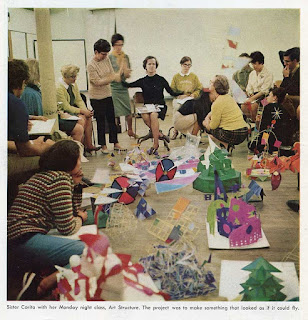
If you are attending this years Festival of Faith and Writing in Grand Rapids, please consider signing up for my Festival Lunch Circle. Slow Looking: Freeing the Mind to Observe This Circle introduces participants to Corita Kent, an Immaculate Heart sister known as the "Pop Art Nun," who captured the imagination of the 60s and early 70s with her free-spirited designs (her iconic LOVE stamp is still sold by the U.S. post office). Sister Corita helped her students to see the world a new way—in small bite-size pieces. Her “finder,” a small cardboard frame, reshaped the everyday and brought minutia into perspective. Jane Hertenstein  is the author of over 90 published stories both macro and micro: fiction, creative non-fiction, and blurred genre. She teaches a workshop on Flash Memoir and can be found blogging at http://memoirouswrite.blogspot.com/ Join this Circle Use this link to read more and sign up: https://ccfw.calvin.edu/festival/festival-lunch-circles/ From To Begin with ...

Nothing new to write

Image
I’ve come to the end of the year, a busy year at that for publication acceptances. I’ve worked hard on revisions and submitting manuscripts to publishers, agents, and contests. I rode my bike up the Rhine River through Germany, France, and Switzerland. And, I’ve come to the end of new stuff to write about. So it feels like. Lately. Perhaps, I need to lower the bar or slow down. Part of my preparation for my talk at the Festival for Faith and Writing, Slow Looking, is about honing observation skills. Living in the moment. Creating a Zen-like attitude toward the world. Definitely not listening to the news. I never liked nature poetry. I relegated it to old ladies, to people who went to bed at 7 pm and asked for the senior discount at the donut shop. There was a 4 o’clock special at the Denny’s restaurant I worked at in Centerville, where we could count on the same retirees showing up with their potbellies and suspenders and pocketbooks full of half-used tissues and Hawaiian white g...

Slow Looking: a rainy late fall morning

Image
Last spring I submitted a proposal to the Festival of Faith and Writing for their upcoming 2024 conference—the first in about 6 years to be in-person—for a Festival Circle. My proposal was selected! Slow Looking: Freeing the Mind to Observe This Circle introduces participants to Corita Kent, an Immaculate Heart sister known as the "Pop Art Nun," who captured the imagination of the 60s and early 70s with her free-spirited designs (her iconic LOVE stamp is still sold by the U.S. post office). Sister Corita helped her students to see the world a new way—in small bite-size pieces. Her “finder,” a small cardboard frame, reshaped the everyday and brought minutia into perspective. Jane Hertenstein is the author of over 90 published stories both macro and micro: fiction, creative non-fiction, and blurred genre. She teaches a workshop on Flash Memoir and can be found blogging at http://memoirouswrite.blogspot.com/ Do I have a clue as to how I’m going to present? No—it’s slowly...

Simple Things

Image
Characteristics of Pop Art, the kind Sister Corita evolved into while teaching at Immaculate Heart College, are two. One) is a preoccupation with the everyday, taking symbols or objects we’re used to seeing—or not—and recasting them or turning them sideways or on their head so that we see them differently. What Andy Warhol did with Campbell Soup, Tomato, cans Sister Corita did with Wonder bread, and the G in General Mills. Two) is color. Not the run of the mill color, but vibrant, acid kool-aid color, Kerouac, Timothy O’Leary color. Both of these characteristics are emblematic of Christianity—for those with ears to hear and eyes to see. It is about the visible world, amplified, a transcendent world all around us. Taking the quotidian and going deeper, beyond, helping us to let go, to believe— like seeds in the wind, couched in the earth, waiting to grow. This weekend I took several long bike rides within 20- 25 miles of my house and I was amazed at the color of the sky, the lush gr...

Who Would She Be?

Image
Who Would She Be?   When Sister Corita contemplated a step away, she had to completely re-imagine her identity, who she was and who she would be. She had been a member of the Immaculate Heart of Mary for 32 years, since 1936 when she decided after high school to go into the order. Her devotion was such that she had to give her all. During her time at Immaculate Heart College she thrust her whole self into teaching. Many of her former students could testify as to the amount of work she piled on them as if her class was the only one they were taking. Her assignments ranged from visiting gas stations and grocery stores to observe signage to helping create installations for the New York World’s Fair and a walk-thru exhibit at the World Council of Churches Assembly in Uppsala, Sweden. And, of course, there was the Mary’s Day Parade where the class printed banners, programs, etc for the ceremony. This last move would be a great leap. For so long she had been a teacher-nun, a si...

Change is coming, a time to leave

Image
Change is coming, a time to leave   During the process of Vatican II, Corita and her community embraced change, not just for change-sake, but to become more relevant to the students and broader community they served. If change was needed to bring the message of Christ to their constituents in this turbulent time, then they were for it. The sisters voted overwhelmingly to pursue Vatican II renewals, such as eliminating the habit and compulsory daily prayer. Archbishop James McIntyre was not happy. From that moment on he sought to restrict the order and banned them from teaching. He gave them an ultimatum to abandon what he saw as leftist tendencies or dispense with their vows. Another vote. Three-quarters of the sisters left to form their own order, Immaculate Heart Community, an ecumenical community for both men and women of all faiths. Prior to this Sister Corita took a sabbatical at the invitation of a friend and spent the summer of 1968 in Cape Cod. There, away from the in...

Stay and Fight?

Image
 Stay and Fight?   The early Sixties would later be known as a hotbed of creative and artistic experimentation—indeed, ushering in an era of radical priests and nuns. Sister Corita had started a series of masterclasses at Immaculate Heart featuring some of the most ingenious voices in the arts, visual, literature, and music. The lectures and conversations of the Great Man series (notice how this was titled purposely not to stir up controversy) featured Charles Eames, John Cage, Alfred Hitchcock, Buckminster Fuller, and Father Daniel Berrigan. It is this enduring friendship with the Vietnam War critic and activist that doomed Sister Corita. Los Angeles Cardinal James McIntyre who served from 1948 to 1970 would later be described in a Washington Post obituary as “one of the Catholic Church's most conservative and controversial prelates.” He was a Nixon man, a John Birch supporter, a staunch anti-communist, and even his own allies and fellow priests had to kindly ask him ...

Stay and fight or leave, it’s not possible to do nothing

Image
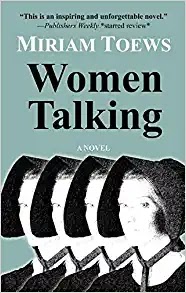
 Stay and fight or leave, it’s not possible to do nothing   I started this series of essays as a critique/review of the recent film, Women Talking based upon the book by the Canadian author Miriam Toews about an isolated old-school Mennonite Colony is a remote area in South America. In the film we’re not sure where the action is taking place. Suffice it to say, the women didn’t either. They have no road map, no knowledge of the language of the region, nor practical skills outside of husbandry. Of the three options, during a round of voting, stay and do nothing is ruled out, so the conversations revolve around stay and fight or leave. Contemplating this conundrum, I was reminded of Sister Corita. Sister Corita 1918-1986 was a member of the Sisters of the Immaculate Heart, a teaching order. She taught at Immaculate Heart College in Los Angeles, California. This posh area of LA is not the first place one thinks of for a convent and Catholic college, tucked into the Holl...

Facing Rejection

Image
 On Meditating, Sort Of, by Mary Oliver Meditation, so I’ve heard, is best accomplished if you entertain a certain strict posture. Frankly, I prefer just to lounge under a tree. So why should I think I could ever be successful? Some days I fall asleep, or land in that even better place — half asleep — where the world, spring, summer, autumn, winter — flies through my mind in its hardy ascent and its uncompromising descent. So I just lie like that, while distance and time reveal their true attitudes: they never heard of me, and never will, or ever need to. Of course I wake up finally thinking, how wonderful to be who I am, made out of earth and water, my own thoughts, my own fingerprints — all that glorious, temporary stuff. I’m in an uncomfortable place right now—I’m speaking metaphorically. Yes, I long for my tiny house and a sense of permanence, but this “place” I speak of is psychological. Once again, an agent has let me go. He said, You have no platform. There was no arguing ...

There She Goes

Image
                                                                            Jane riding away

Damn the Circus

Image
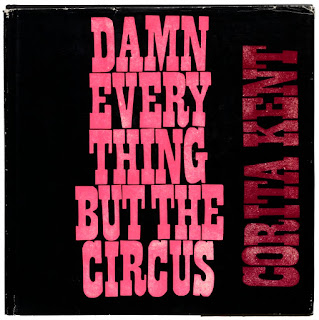
 Damn everything but the circus!   …damn everything that is grim, dull, motionless, unrisking, inward turning, damn everything that won’t get into the circle, that won’t enjoy, that won’t throw its heart into the tension, surprise, fear and delight of the circus, the round world, the full existence… --e.e. cummings I’ve tried to track down the source of this quote and found nothing but head scratching. “The first sentence is from Act I, Scene II of e.e. cummings play: Him. It is also known as "the acrobat's passage". The rest of the quote was apparently written by someone else. It does not appear in the play (published in 1927). "Damn everything but the circus!" is original with cummings, although often attributed to a female author, who may have used the quote as a title for a book. URL: https://able2know.org/topic/46665-1 Others contend It is not a poem but a part of a series of lectures titles "i Six Nonlectures" Comprising...

Damn Everything but the Circus

Image
In 1968 at age 50 Corita (she decided to retain the name attached to her art life, Frances forever would be buried in the past) extended her sabbatical by withdrawing her vows and leaving the order. At the time she was drawn to the poetry of several transcendental writers. This is where I discovered Corita—Googling the e.e. cummings poem, Damn the circus I was considering an epigraph for my non-fiction manuscript about cycling the UK from the very top to Land’s End. I needed something that conveyed the tension, the push and pull of fear and adrenaline, the tight wire of risk. The funny thing about risk is that it makes life interesting. Those who avoid it lead safe, stable mediocre lives. It is the person who steps away, who dares to lose sight of the shore that ventures forth to discover. Sometimes we find out something entirely new about ourselves, the world when we take a chance. This high wire act has all the pros and cons of every major decision—but it is about facing these decis...

A New Identity: the Independent Woman

Image
Lately it seems as if three thousand times a day I breathe out the words: God help me. Walking through the labyrinth has been an exercise into going forward and giving myself up to the unknown. Sister Corita made the difficult decision to leave her comfort zone, the environment of the convent where she had bloomed—and, in fact, was a star. At the school and convent she was often times the center of attention, her opinions mattered and were sought out. Here she was: about to leave her safety net. For what? The world in 1968 was raft with violence. The assassination of Martin Luther King and Bobby Kennedy, the images on TV of bodies piling up from the war in Vietnam, rioting in the cities. Sister Corita’s reaction to this was Yes, daisy petal She was saying yes to a new life, but who would she be? An activist artist. Women during this time period were coming to terms with definitions of feminism. Slacks were still not permitted in the workplace. In the US less than 50% of women were in t...

Who Would She Be

Image
When Sister Corita contemplated a step away, she had to completely re-imagine her identity, who she was and who she would be.  She had been a member of the Immaculate Heart of Mary for 32 years, since 1936 when she decided after high school to go into the order. Her devotion was such that she had to give her all. During her time at the Immaculate Heart of Mary Academy she thrust her whole self into teaching. Many of former students could testify as to the amount of work she piled on them as if her class was the only one they were taking. Her assignments ranged from visiting grocery stores to observe signage to helping create installations for the New York World’s Fair and a walk-thru exhibit at the World Council of Churches Assembly in Uppsala, Sweden. And, of course, there was the Mary’s Day Parade where the class printed banners, programs, etc for the ceremony. This would be a great leap. For so long she had been a teacher-nun, a sister-nun, artist-nun—what would she be if sh...

A Time Like No Other

Image
The 1960s, like 2020, was a time like no other. There was assassinations, urban unrest, Civil Right marches, a focus on racial injustice. What had been before was eroding and who knew what the “after” would look like. All of society was being shaken up. The Church was part of this; Vatican II had put church function and routines into the blender. There was a loosening up of rules such as wearing the habit, times for prayer, and how the clergy would interact with the “world.” In this turbulent time Sister Corita Kent made friends with another clergy renegade, Father Daniel Berrigan—the priest poet. He started the Ploughshares Movement during the Vietnam War of which he was an outspoken critic. Sister Corita designed many book covers for his books and in turn integrated his quotes into her art. “It seemed as though in her art the juices of the world were running over, inundating the world, bursting the rotten wineskins of semblance, rote and rot.” Daniel Berrigan 2020 has been a sl...

A Step Back

Image
I learned a new word or concept this weekend: tertianship. Tertianship is essentially a year of probation, when a Jesuit examines his vocation before taking final vows. ( https://jesuitportal.bc.edu/research/documents/1966_decree10gc31/ ) It is a time to go deeper, a time to step back and assess. I discovered this word in regards to my reading on Sister Corita Kent and her “artwords.” Almost every Sunday I’ve been hopping on my bike and riding to a labyrinth located off Ridge Blvd. at a Benedictine Sisters convent. The sisters used to run St. Scholastica a school for girls that awarded an International Baccalaureate Diploma, It must have been a tremendous blow to the nuns who had dedicated their lives to teaching when the school shut down almost 10 years ago. I discovered the labyrinth during Open House Chicago . I walk the maze, trying to work out the tangle inside my head. Right now the Church and politics are so entwined as to almost be indiscernible. The current administra...

Consumer Art

Image
Sister Corita was influenced by such thinkers as John Cage and Buckminster Fuller whose philosophy was central to the Black Mountain College—that being an interdisciplinary approach to learning where the arts is integral. Sort of like: everything is connected. There was a strong emphasis on creativity and creating. Indeed, in her 10 Rules there are so many connections. Definitely for her everything emanated out of a spiritual core. She was doing art in a turbulent time. The world was at a tipping point—there was free love, rock’n’roll, the Vietnam War with its subsequent lies, assassinations, Civil Rights unrest, political upheaval. A bit like today. Yet there was a lack of cynicism as man y young people began to search for the truth. For Sister Corita there was the obvious and then the less obvious, the text and the subtext, the thing behind the thing, the message behind the dogma. So even though she is working with words, she is attempting to engage a viewer’s head and heart b...

Sister Corita’s 10 rules

Image
  The following poster was collaboration between Sister Corita and John Gage, Bohemian-spirited composer and musician. Theirs was an unlikely friendship between two artists; one visual and the other audible. Sister Corita came up with the rules but attributed Rule 10 to John Cage. Their friendship helped to promote and popularize the rules.  Now rules were familiar to Sister Corita as she was part of a community and a religious order. She also understood the importance of practice. A religious exercise or practice propels the novice into a regular habit, forces them out of their comfort zone or nebulous world of feeling into a practical duty. But art for her was no duty, but an outward expression of an inward philosophy of being. Which included doing. These rules are not art for art’s sake, but require picking up a brush or pen, opening the laptop, the WORD file, the story where you last left off. It is work, yes, but more than that; it is life. A state of being. Rule ...

The Power of Words

Image
I have a group of friends who every Sunday afternoon go outside and line the street out front of our building holding up signs with the name of an unarmed Black person slain by police. Tamar Rice, Jacob Blake, Sandra Bland, Breonna Taylor. Unfortunately the list grows every week. Some of the names are easily recognizable, but some are not—but behind every name is a story, a whole life, cut short. There is power in these names. I know because of the reaction, positive and negative directed toward those holding the signs. So as much as I mentioned in my last post that I’ve never been big on artwork with words (artwords) I see now how it can move the viewer, and hopefully enable change. Much of Corita’s art was motivated by her commitment to messages and reaching people through the medium of silk screens. Sister Corita saw the intersection of art, justice, and the sacred. I speculate/wonder what she would do today with BLM, Black Lives Matter, how she would illustrate those words, b...