Posts

Showing posts with the label Sarah Polley

Lost and Found

Image
Lost and Found In the film one of the women, at a very intense part, almost offered comic relief by telling a story of her beloved horses. Greta tells the story of driving in her buggy along a country road bounded by drainage ditches on both sides. Along the way there was an aggressive dog that scared the horses, who in the past had bolted and run into the ditches, upsetting the cart. So Greta learned that in order to keep control of her own fears, she had to not look to the left or the right but simply keep her eyes focused in the middle of the road and keep Ruth and Cheryl the horses going in that same direction.   I understood this lesson well. When on my cross-country road trip and other bike tours I’d been in a similar situation: When traffic got intenseon Highway 101 (t he Pacific Coast) or in the mountains of Norway on narrow roads without guardrails, where the sides sloped down precipitously. Any mistake and me and my bike could be at the bottom. I had to learn, despit...

Who am I? Still trying to figure things out

Image
Who am I? Still trying to figure things out   While watching Women Talking I had so many thoughts, I began to take notes. One) I was reminded of Corita Kent who left her religious community after 32 years and Two) myself, who left a religious community after nearly 40 years. I entered Jesus People as a single recent college grad, four years later I married and two years later became a mother. I also was a driven worker. I worked at Cornerstone Magazine and with the Cornerstone Festival doing advertising and PR. I networked with local and national media trying to generate stories about the festival which at its peak attracted over 20,000 people. I was used to doing TV and radio interviews and also setting up interviews for the festival director and press conferences with the bands. We also started up a book publishing arm called Cornerstone Press, which at its peak put out about 4 titles a year. In 2007 my daughter graduated high school and began trying to figure out who she...

Who Would She Be?

Image
Who Would She Be?   When Sister Corita contemplated a step away, she had to completely re-imagine her identity, who she was and who she would be. She had been a member of the Immaculate Heart of Mary for 32 years, since 1936 when she decided after high school to go into the order. Her devotion was such that she had to give her all. During her time at Immaculate Heart College she thrust her whole self into teaching. Many of her former students could testify as to the amount of work she piled on them as if her class was the only one they were taking. Her assignments ranged from visiting gas stations and grocery stores to observe signage to helping create installations for the New York World’s Fair and a walk-thru exhibit at the World Council of Churches Assembly in Uppsala, Sweden. And, of course, there was the Mary’s Day Parade where the class printed banners, programs, etc for the ceremony. This last move would be a great leap. For so long she had been a teacher-nun, a si...

Change is coming, a time to leave

Image
Change is coming, a time to leave   During the process of Vatican II, Corita and her community embraced change, not just for change-sake, but to become more relevant to the students and broader community they served. If change was needed to bring the message of Christ to their constituents in this turbulent time, then they were for it. The sisters voted overwhelmingly to pursue Vatican II renewals, such as eliminating the habit and compulsory daily prayer. Archbishop James McIntyre was not happy. From that moment on he sought to restrict the order and banned them from teaching. He gave them an ultimatum to abandon what he saw as leftist tendencies or dispense with their vows. Another vote. Three-quarters of the sisters left to form their own order, Immaculate Heart Community, an ecumenical community for both men and women of all faiths. Prior to this Sister Corita took a sabbatical at the invitation of a friend and spent the summer of 1968 in Cape Cod. There, away from the in...

Stay and Fight?

Image
 Stay and Fight?   The early Sixties would later be known as a hotbed of creative and artistic experimentation—indeed, ushering in an era of radical priests and nuns. Sister Corita had started a series of masterclasses at Immaculate Heart featuring some of the most ingenious voices in the arts, visual, literature, and music. The lectures and conversations of the Great Man series (notice how this was titled purposely not to stir up controversy) featured Charles Eames, John Cage, Alfred Hitchcock, Buckminster Fuller, and Father Daniel Berrigan. It is this enduring friendship with the Vietnam War critic and activist that doomed Sister Corita. Los Angeles Cardinal James McIntyre who served from 1948 to 1970 would later be described in a Washington Post obituary as “one of the Catholic Church's most conservative and controversial prelates.” He was a Nixon man, a John Birch supporter, a staunch anti-communist, and even his own allies and fellow priests had to kindly ask him ...

A Personal Calling, or Vocation

Image
A Personal Calling, or Vocation Vocation—the difference between work and putting your passions into action. Yes, I labored, getting up early before the sun and sometimes working an overnight shift at the community’s magazine Cornerstone. Volunteering outside my other volunteer hours. You see, the work was not compensated monetarily. We worked together for the benefit of others and basically for room and board. It is a complicated kind of communism where ideology is supreme and we corporately strived to see that the greater whole grew, got better. It is a concept almost entirely archaic. No one does this except maybe a recent grad taking a gap year—except this was no grand tour or backpacker’s dream trip; we wanted to share Christ’s love in action by providing meals, housing, relationship. Ourselves. Outside of the practical work of feeding the community (sammies, kitchen crew) I did visitations to the elderly, in the form of light housework and wellness checks, taking them to the docto...

Finding Community, Finding Home, part 2

Image
Finding Community, Finding Home, part 2 Community in Chicago at Jesus People USA did not immediately feel like home and it took a while for me to think that they “got” who I was. There were a lot of misunderstandings along the way. One of my first jobs was making sammies. Our work crews that went out during the day (comprised entirely of men) required packed lunches. I was on a crew that made sandwiches, slapping peanut butter and jelly between two pieces of bread. Not the most nutritious lunch for those doing hard manual work all day outside, but it’s what we had. The addition of chips and homemade cookies if you were lucky. A piece of fresh fruit was considered a luxury. I then got moved onto a kitchen crew where we literally worked ALL DAY, from 4 a.m. getting breakfast out first for the workers, then for moms and kids going to school. If you were late, then nothing. The day finished around 7 pm after cleaning up. At first none of these jobs were me; I could identify with hardly any...

Finding Community, Finding Home, part 1

Image
Finding Community, Finding Home, part1 It took a while. I finished high school. I started at Wright State University. I dropped out of Wright State. I went to Maranatha Bible Institute associated with my church. Then there was a church split and I was excommunicated. Friends were told to mark, admonish, and avoid me—a sermon preached from the pulpit, as laid out 2 Timothy chapters 2 and 3, Scriptures taken out of context and perverted for power over others. I suffered a breakdown. I went back to Wright State while at the same time moving out of my parent’s house. I was struggling for clarity. I dropped out of Wright State—again—and traveled out West, getting a seasonal job at Yellowstone National Park. I extended my work contract, as I had no future plans. Late 1979/early 1980 found me in Athens, Ohio enrolled at Ohio University. I chose this school as I wanted to be close to a very solid friend, someone who would call me out and also encourage me: Keith Wasserman, who would go o...

Who Am I? Questions of identity outside of community

Image
Who Am I? Questions of identity outside of community The women of Women Talking were born and raised in their colony. Every part of their life was regulated by their faith. How they ate, related to others, and their eternal soul. That was not my experience. I chose to join my community as a young person right out of college. Even as a child I felt called by God. Call it prayer or talking to the sun, I held conversations in my head, sometimes audible, asking for help, guidance, begging for love, mercy. I had a chaotic childhood where I constantly wondered about my place in the family. It’s hard to reduce into words how I felt, much like an outsider. I do not believe anyone in my family “got” me. I was certainly lonely. I yearned for acceptance and was open to fairies, to a make-believe. I imagined a world on the underside of the real one that was perhaps more real than the one we can see and hear, touch, taste, and feel. That there was something MORE to this life. Thus, even as a yo...

Settle in for a long Series of essays, titled Women Talking

Image
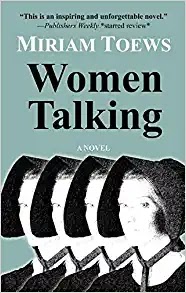
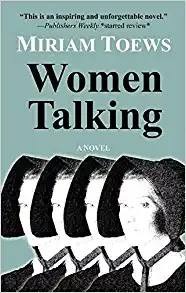
Women Talking was possibly the only Oscar-nominated film I saw this season—and that’s only because it was available on Amazon Prime. Sorry movie theaters, I’m still not going out, mainly because I need the luxury of bailing because I’m tired and want to go to bed. I often watch stuff in stages. Women Talking I gulped down in one sitting. It’s complicated. The subject matter and how it left me feeling. The premise of the film/book is based upon true events. An Anabaptist history lesson: From Wikipedia, the free encyclopedia: According to the 2012 estimates, there were 100,000 Mennonites living in Mexico[1] (including 32,167 baptized adult church members),[5] the vast majority of them, or about 90,000 are established in the state of Chihuahua,[2] 6,500 were living in Durango,[3] with the rest living in small colonies in the states of Campeche, Tamaulipas, Zacatecas, San Luis Potosí and Quintana Roo. Their settlements were first established in the 1920s.[6] In 1922, 3,000 Mennon...

Stories We Tell

Image
  Sarah Polley’s latest movie (I loved Away From Her , Julie Christie was transcendent!) is right up the Memoirous alley. One one level it is a young woman’s exploration of her own creation myth while on another level it is about how a talented director chooses to edit—what to leave in and what to take out of the story of her own life. The film is a mirror with many facets. It is also smoke and mirror—as a viewer we’re not sure what is real. Sort of in the same boat as Polley as she proceeded with this endlessly puzzling project. Once again truth is a mystery and memory is only one part of the whole. At one point in the film, toward the end, when we think (as a viewer) all of it has been told, there are no more revelations, her brother asks into the camera: What is this movie about? And Polley stumbles for a succinct answer. “It is about memory and how we tell the story of our life.” She goes on to relate that she chose to focus on the discrepancies, where each charact...